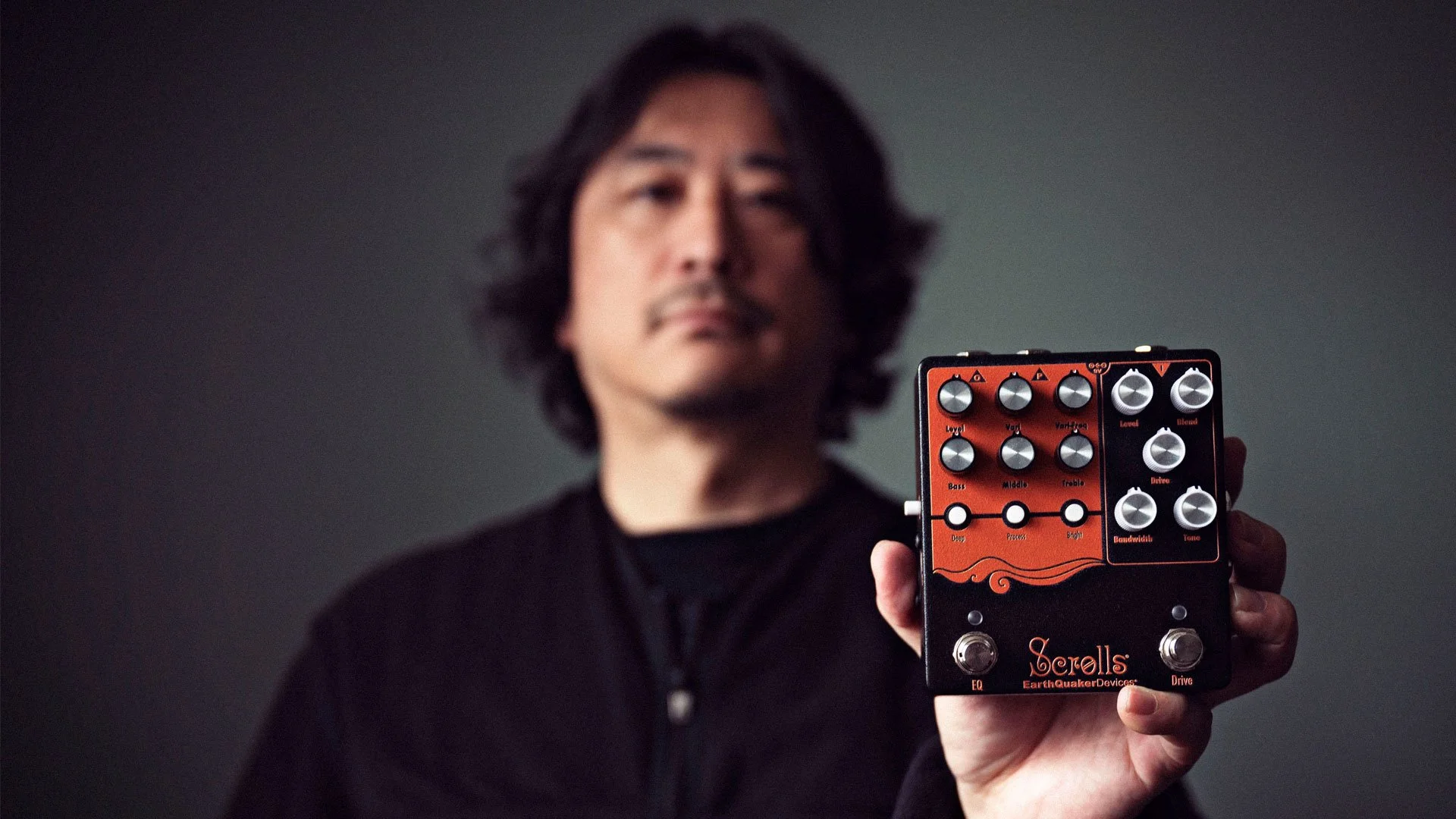
Meet Kentaro Nakao: Co-Designer of the Scrolls Bass Odyssey and Japanese Alt Rock Legend
Corey Jenkins
Kentaro Nakao (中尾 憲太郎) is one of the greatest bassists to emerge from the 1990s alternative rock movement. Highly influential and respected in his native Japan, Kentaro is known for his gritty, aggressive, and driving playing style.
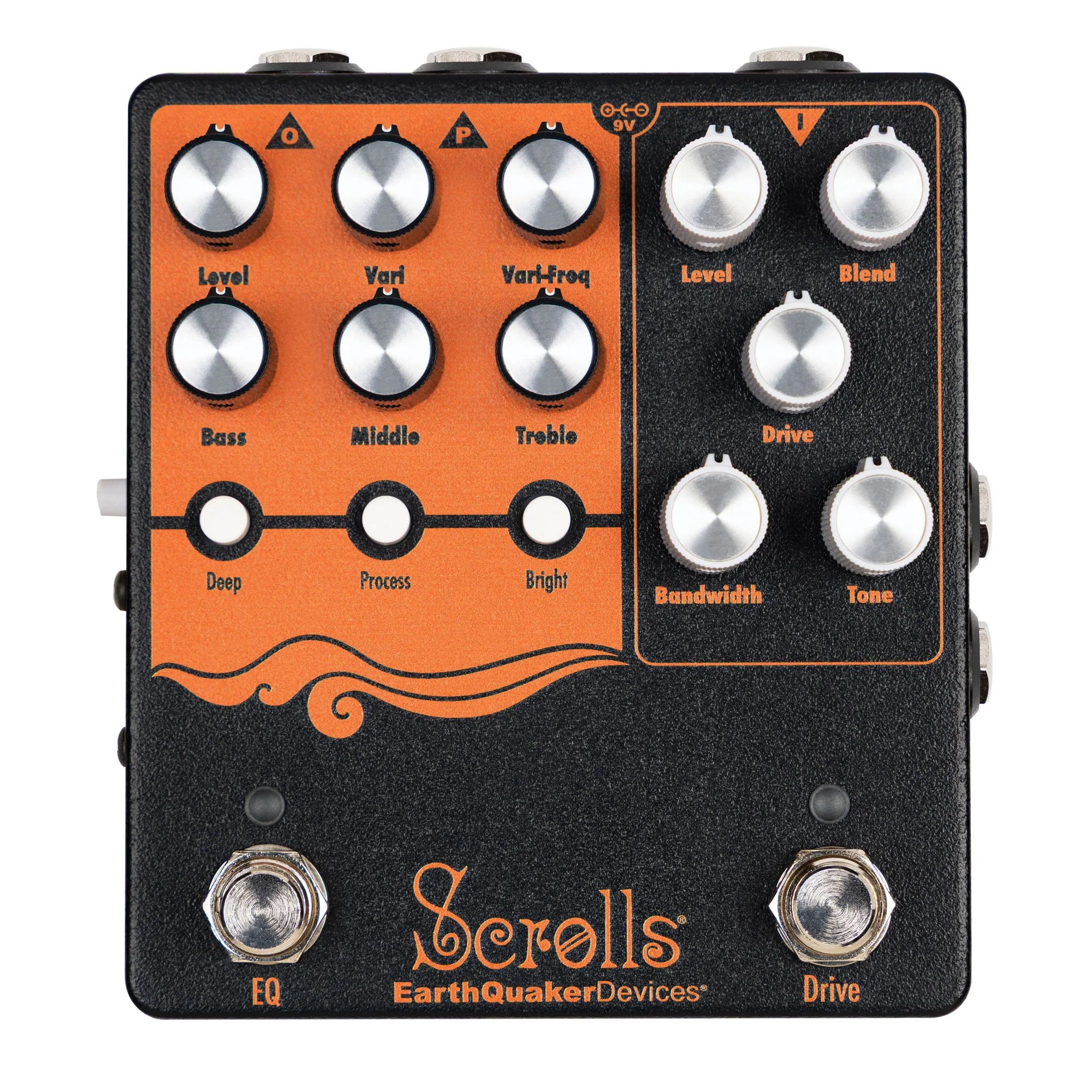
He built a wall of sound that defined a generation of Japanese rock music—a sound we recently helped him harness into the Scrolls Bass Odyssey. Yet, despite this legacy, Kentaro and his work have gone largely undiscovered by North American audiences. Like Lemmy and Peter Hook—and if you haven't heard of them, that's tragic and you have some immediate homework to do—Kentaro used the bass not just to support the song, but to dictate its energy in a way that was completely original and uniquely his own.
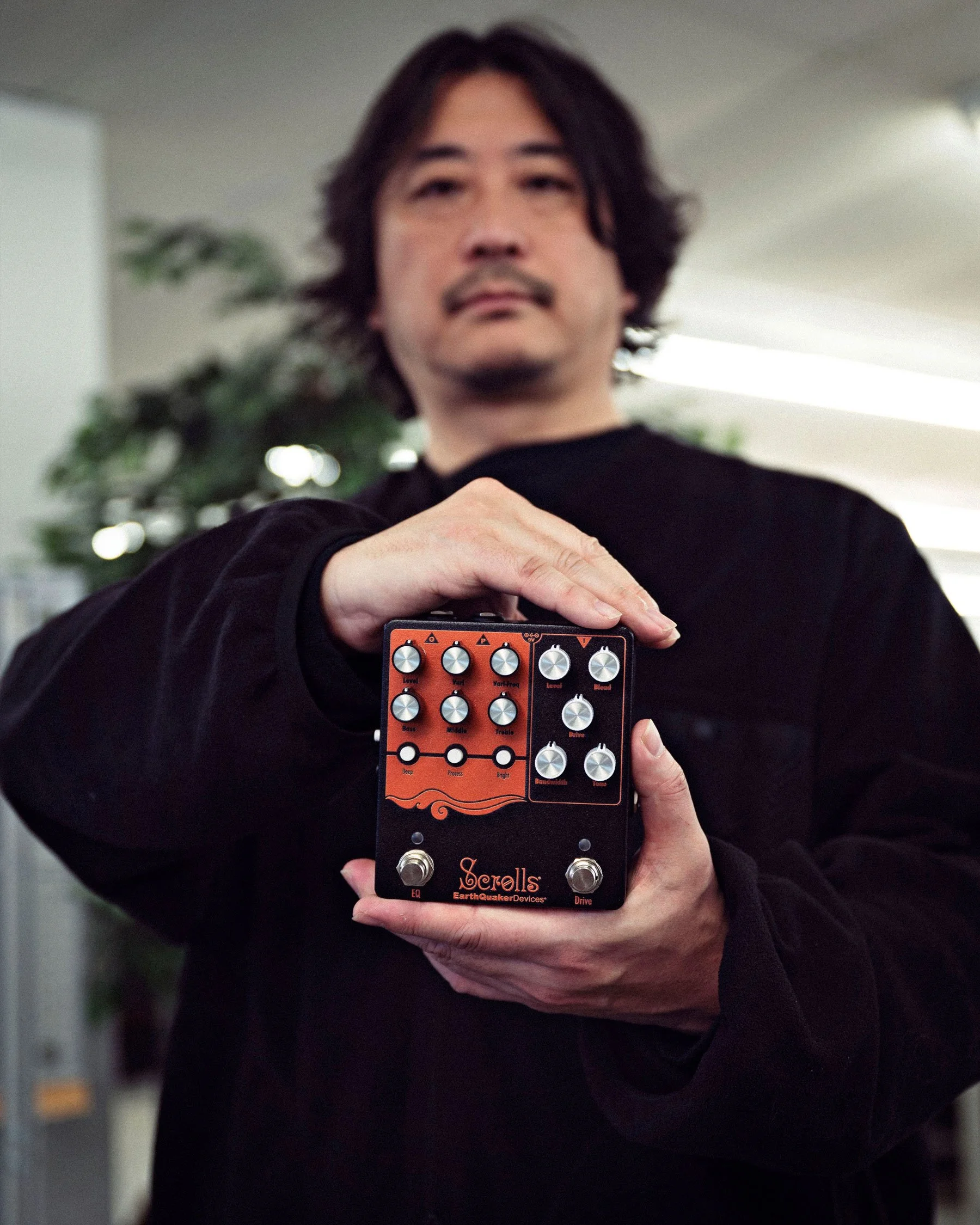
We American musicians typically aren’t exposed to non-English-speaking artists nearly as often as we should be. As a result, we miss out on an entire world of game-changing music. And that’s really a shame. So, let’s spend a few minutes getting acquainted with Kentaro Nakao.
Early Life
Born in 1974, Kentaro grew up in Kitakyushu, an industrial area within Japan’s Fukuoka Prefecture. He was heavily influenced by The Clash early on, and his friends encouraged him to learn bass simply because he was taller than all of them. They thought the instrument’s larger size and longer scale length would suit him perfectly.
He began learning on an Aria Pro II bass gifted to him by a friend’s older sister before moving on to a Precision-style bass manufactured by Fernandes. Before long, Kentaro was anchoring a cover band that played The Clash, Sex Pistols, and Stray Cats, as well as an original three-piece rock band.
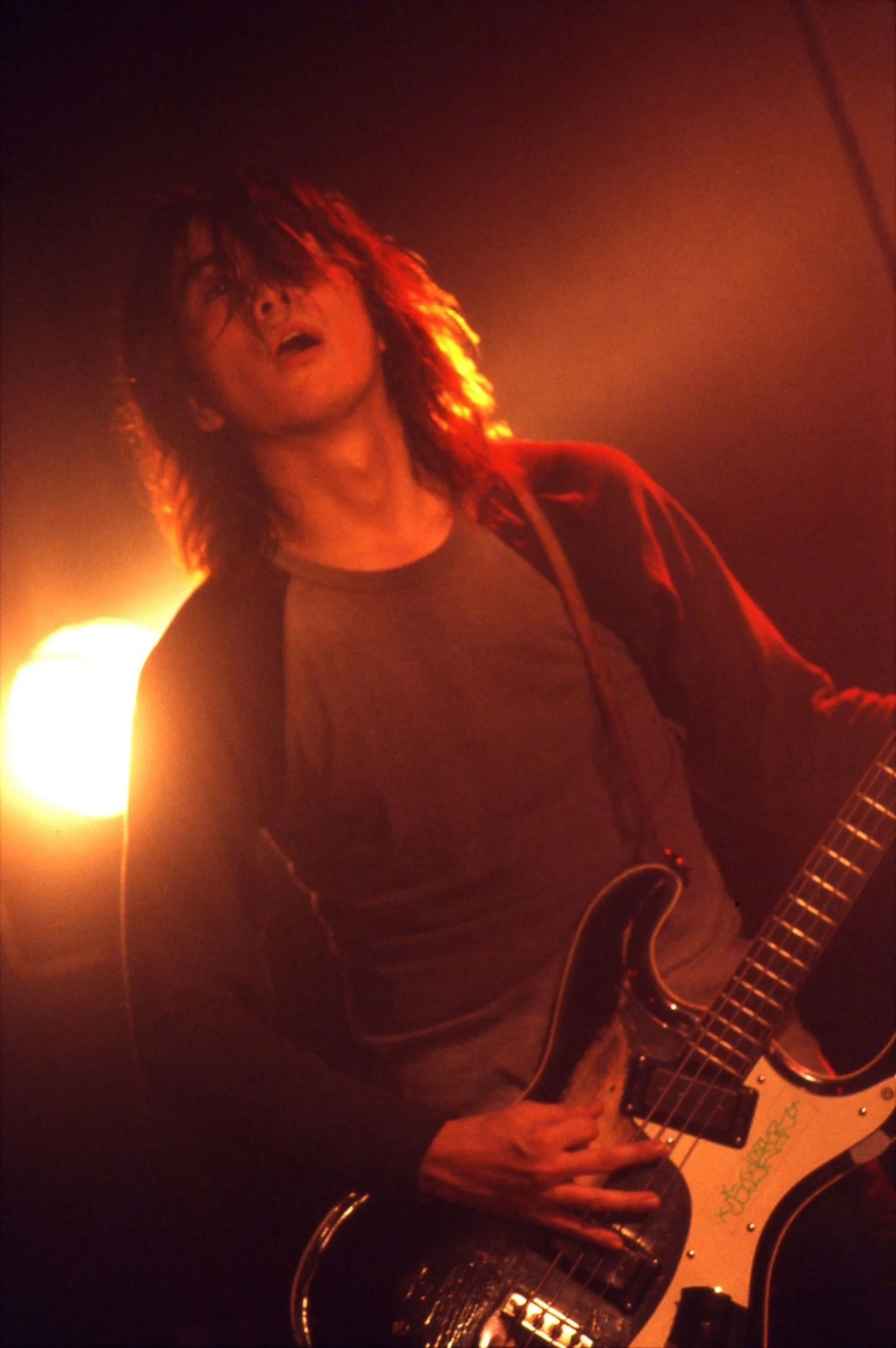
Number Girl
His professional journey began in the mid-1990s when he joined Number Girl after being invited by vocalist and guitarist Shutoku Mukai. Kentaro’s gritty bass tone quickly became the rhythmic engine for Number Girl and was central to the band’s stylistic identity.
“I was plugging my bass directly into an amp when I first joined Number Girl, but I always felt that something was missing,” Kentaro recalls. “Eventually, I picked up a SansAmp Bass Driver I found at a music store. After I got it, I remember feeling that the pedal really helped my sound mix in with the rest of the band perfectly.”
When asked if there was anything he could tell us about his style and his approach to playing during his Number Girl days, Kentaro summed it up in one word: "Brutality." Kentaro’s sonic imprint was so integral to the band’s sound that when he decided to leave the group in 2002, the remaining members decided Number Girl couldn't exist without him. They opted to disband rather than carry on with a replacement.
Renowned for their blend of Pixies-style dynamics and post-hardcore intensity, Number Girl stands as one of Japan's most celebrated rock bands. They returned for a string of shows from 2019 to 2022, and while there are no immediate plans for another reunion, Kentaro remains open to the possibility. “I don’t know what the future holds," he says, "but yeah, I would like to do it again.”
Essential Listening: Kentaro recommends the songs "Teppu Surudoku Natte"(鉄風鋭くなって and "Eight Beater" as the perfect entry points into the Number Girl catalog.
Sloth Love Chunks & Crypt City
After parting ways with Number Girl, Kentaro lent his signature playing style to several bands, but two stand out as especially important to his musical evolution:
Sloth Love Chunks: Formed around 2005, this group was a supergroup of sorts within the Japanese indie scene, celebrated for its energetic punk and alt-rock roots. "After Number Girl, I wanted to start playing music that I purely loved playing, and Sloth Love Chunks was my first step in that direction," Kentaro says.
Crypt City: Formed as the first decade of the 21st century came to a close, this band allowed Kentaro to explore harder, darker styles. Their dynamic, heavy, and raw sound earned them both critical acclaim and a loyal following.
In May of 2019, Kentaro and Crypt City embarked on The EarthQuaker Devices Japan Tour, a five-date run that brought them together with fellow EQD artists Boris, Lisa Bella Donna, and Relaxer.
Essential Listening: Check out “Loveless Ideals” by Sloth Love Chunks and “Debate” by Crypt City.
Ongoing Legacy
In addition to his storied career as the bassist for Number Girl, Sloth Love Chunks, and Crypt City amongst others, Kentaro is one of the most in-demand session bassists in Japanese rock and pop. He has lent his talent to an array of artists, including Kenichi Asai & The Interchange Kills, ART-SCHOOL, and Kaela Kimura.
Most recently, he's been working with TK from Ling Tosite Sigure—a collaboration that brought him to North America for a tour throughout May and June 2026.
For bassists, Kentaro’s discography is a vital resource. He reimagined what the bass was allowed to do in a rock band. The influence of his aggressive, rhythmic playing style can be heard in virtually every Japanese indie band to follow in his wake, including one of Japan’s biggest math-rock exports, tricot.
Dive Deeper
Ready to expand your sonic horizons? Kentaro has curated two exclusive playlists that dive deep into his extensive body of work:
And while you’re at it, check out this EarthQuaker Session featuring Mass of the Fermenting Dregs performing “She is inside, He is outside”—a killer track from their Kentaro-produced album, World Is Yours:
Go spend some time with his catalog. He’ll inspire you, too.

Corey Jenkins is the Marketing Specialist at EarthQuaker Devices. An Akron, Ohio native, he started chasing tone at age nine after hearing Mick Ronson's guitar work on "Ziggy Stardust" for the first time. He has been active within the local music community for years and has worked professionally as a creative problem solver for the past decade and a half. In his spare time, Corey enjoys spending time with his son, his three cats, and his 1973 Univox miniKORG K1.