Pre-Amp Alchemy: A Deep Dive into the ZEQD-Pre with Jamie Stillman
Corey Jenkins
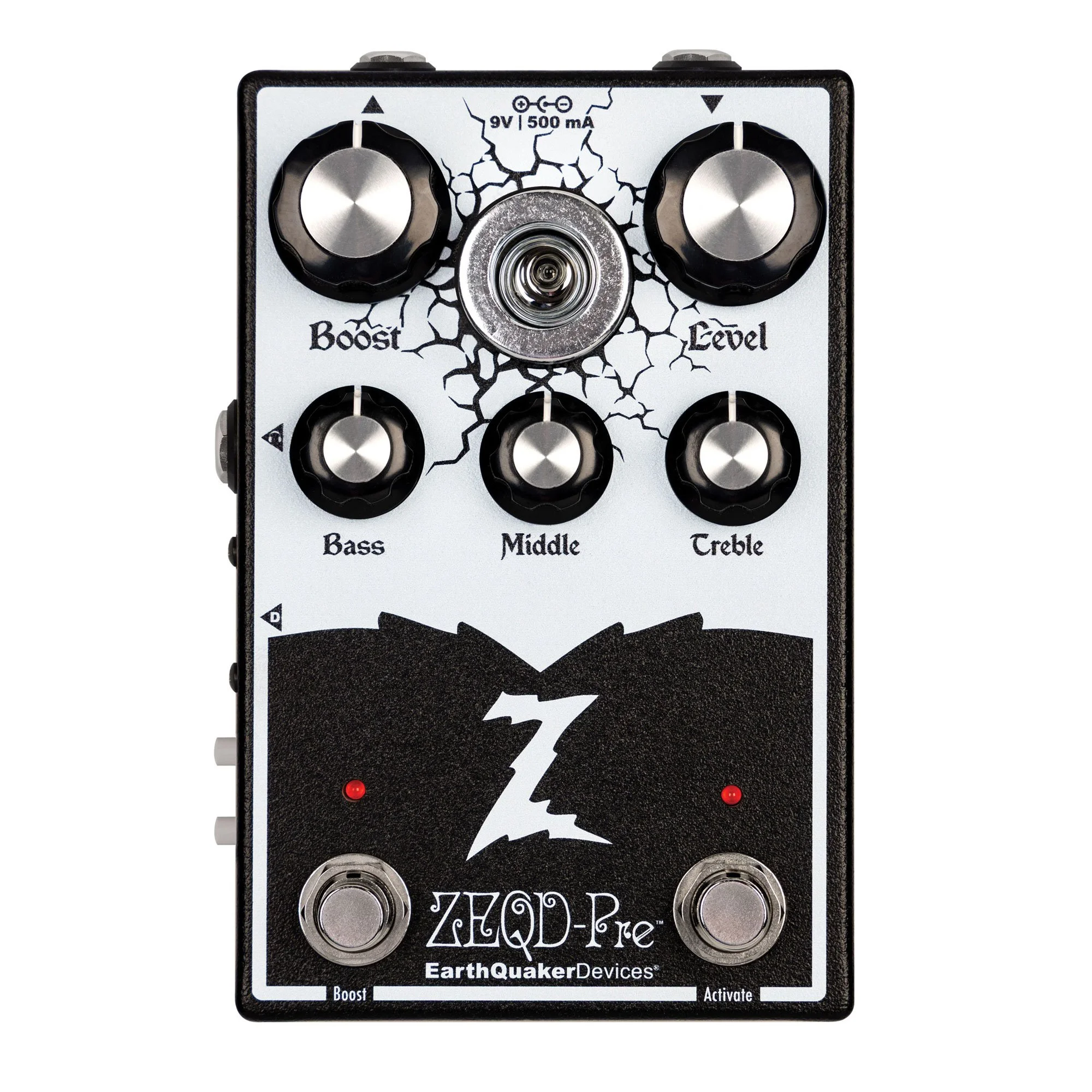
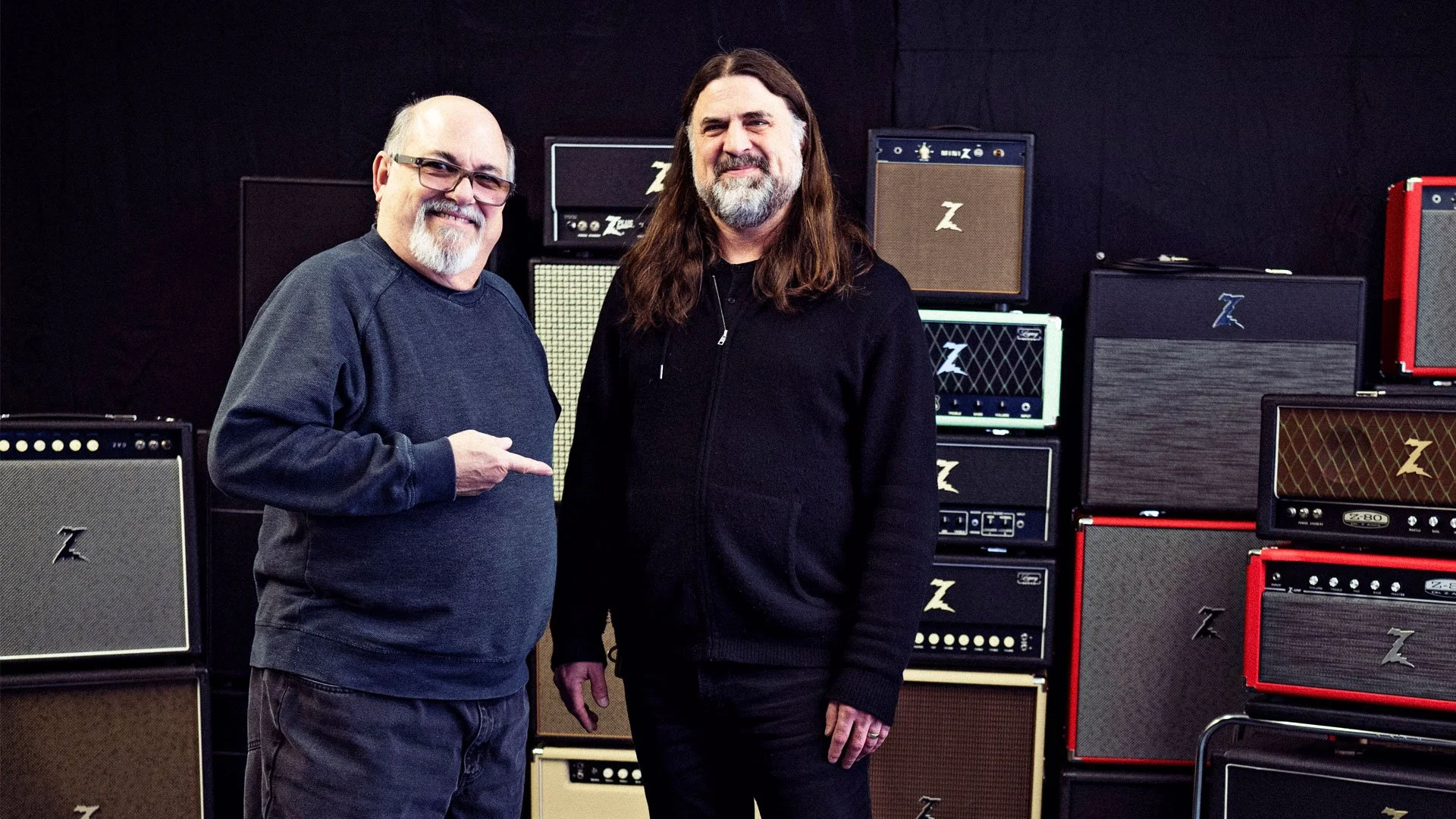
Just before the ZEQD-Pre hit the shelves, our fearless leader Jamie Stillman dove deep into the specs of this all-analog EF-86 tube preamp—a powerhouse collaboration with the one and only Mike Zaite, the mastermind behind Dr. Z Amplification.
In this interview, Jamie discusses his approach to voicing analog speaker cabinet emulation, the ZEQD-Pre’s “third voice,” the pedal’s power requirements, and his initial introduction to Dr. Z Amps.
What can you reveal about the history between EarthQuaker Devices and Dr. Z Amplification?
I’ve been a fan of Dr. Z Amps for a long time. My introduction to them was through an old friend, Al Karpinski (from the Kent, Ohio band The Six Parts Seven), who had a stereo pair of Dr. Z amps. Al was incredibly particular about his tone back in the ‘90s, I wasn’t worried so much about tone, I just wanted to be as loud as possible, but Al was a total gear nerd. He had these Fulltone pedals—which no one was really using yet—and a beautiful guitar running into the Dr. Zs. I knew immediately those amps were special just because they met Al’s standards, and I thought it was cool that they were made in Ohio.
I didn't see another one until years later at EarthQuaker’s first Summer NAMM in Nashville. I found a Dr. Z KT-45 in a local music store for a great price, played through it, and it was incredible. I bought it on the spot, and that KT-45 ended up being used in almost every one of our demo videos for a long time.
Do you remember when you first met Mike Zaite a.k.a Dr. Z?
I don’t recall the exact introduction, but I had friends working there—it was likely through Buddy Akita. Eventually, Z reached out to me about designing an overdrive pedal specifically for one of his amps. That led to the Dr. Z Z-Drive, a Germanium/MOSFET dual-voice preamp that was in production from 2015 through 2023.
In the beginning, I mostly went back and forth with Buddy, who would then take the designs to Z. We worked indirectly at first, but eventually, we became friends, and the pedal did well.
What led to the discontinuation of the Z-Drive?
We ran out of the specific diodes used in the circuit and there was no good approximation for them. Any replacement we tried changed the sound too much. Rather than compromise the tone, it made the most sense to discontinue it.
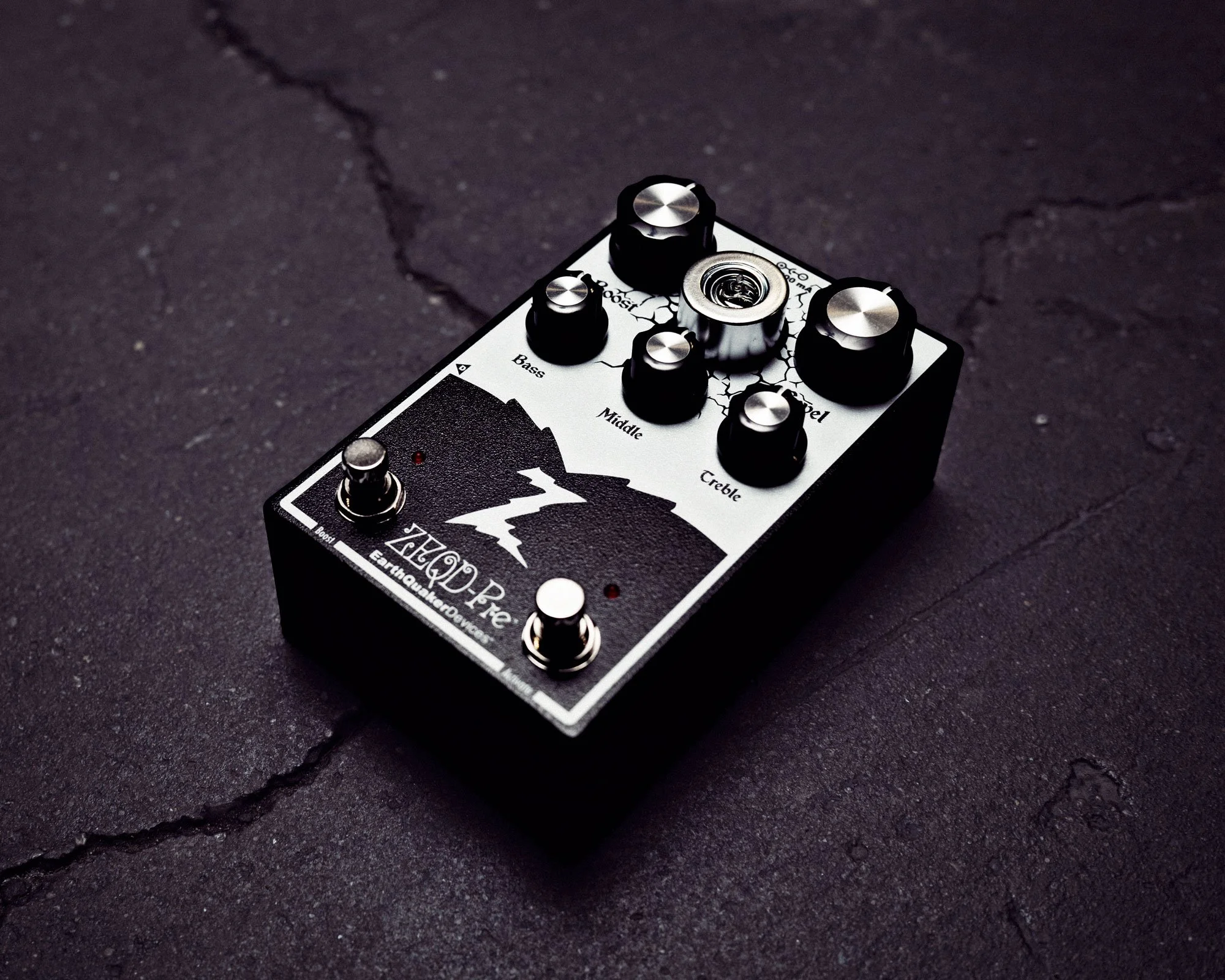
How did you and Dr. Z arrive at the ZEQD-Pre? Were there plans to reimagine the Z-Drive?
About two years ago, Z reached out about doing a new version of the Z-Drive. I was interested, but before I could start, he came back and asked, “What if we made a tube pedal?” He developed a preamp circuit similar to the first gain stages in his amps that utilize the EF86 tube.
When it was ready, he and Buddy brought it down to Akron. It was a tiny circuit housed in a giant amplifier chassis. I plugged it in and was blown away—it was this massive, full-range clean boost. I ran it into my Sunn Model T, and it tightened the low end while adding harmonics I’d never heard from that amp, even with overdrive pedals.
I loved it, but I didn’t know much about working with tubes or high voltage. That was the main hurdle—figuring out how to generate high voltage from a standard nine-volt power supply.
How did you approach the voicing of the speaker cabinet simulation for the ZEQD-Pre?
Other analog simulations often fail in the high frequencies. They’re either rolled off so much that the sound becomes dark and muddy, or they aren't filtered correctly, allowing harsh, sterile frequencies to cut through. You need some of those highs to hear the attack of your pick, but you have to walk a fine line.
For the ZEQD-Pre, I used a series of analog filters to emulate the resonance and smoothness of a speaker. It isn't a scientific measurement of a specific cabinet, I just used my ears. I listened to my own amps and tried to approximate that general feel—good low-end resonance, solid mids, and a high end that isn't shrill.
It has a specific “thing”—if you hit a chunky palm-muted note, it resonates beautifully while staying tight.
What’s the main difference between the analog simulation in the ZEQD-Pre compared to the digital simulations that are all over the market?
Digital simulations are essentially approximations of analog circuits, speaker responses and sometimes room response and even recording technique written in code. Analog simulations are approximations of cabinet responses created by discrete filters.
The main difference is that we’ve preset the sound of the ZEQD-Pre’s analog simulation to just be good.
You can’t flip through fifty different cabs like you can on a digital modeler, but I find having too many options can lead to option paralysis. You find a sound you like, switch to the next one, think it’s better, switch back, and suddenly the first one sounds terrible.
I wanted to simplify that experience. When you spend all your time menu-diving for presets, it kills creativity.
You’ve mentioned that you’re seeing a shift away from digital modelers at EarthQuaker clinics.
I realize I sound like an old person when I talk shop about modern gear, but I’ve noticed a trend. People tell me they bought a high-end modeler, got tired of the complexity, and moved to something like our Easy Listening pedal because they wanted to simplify.
For myself, I don’t want a digital approximation of an amp that sounds like it already has room reverb and compression baked in. I want an amp to be loud, articulate, and clean so that whatever I put into it sounds like itself.
What makes the EF86 tube different from the standard 12AX7?
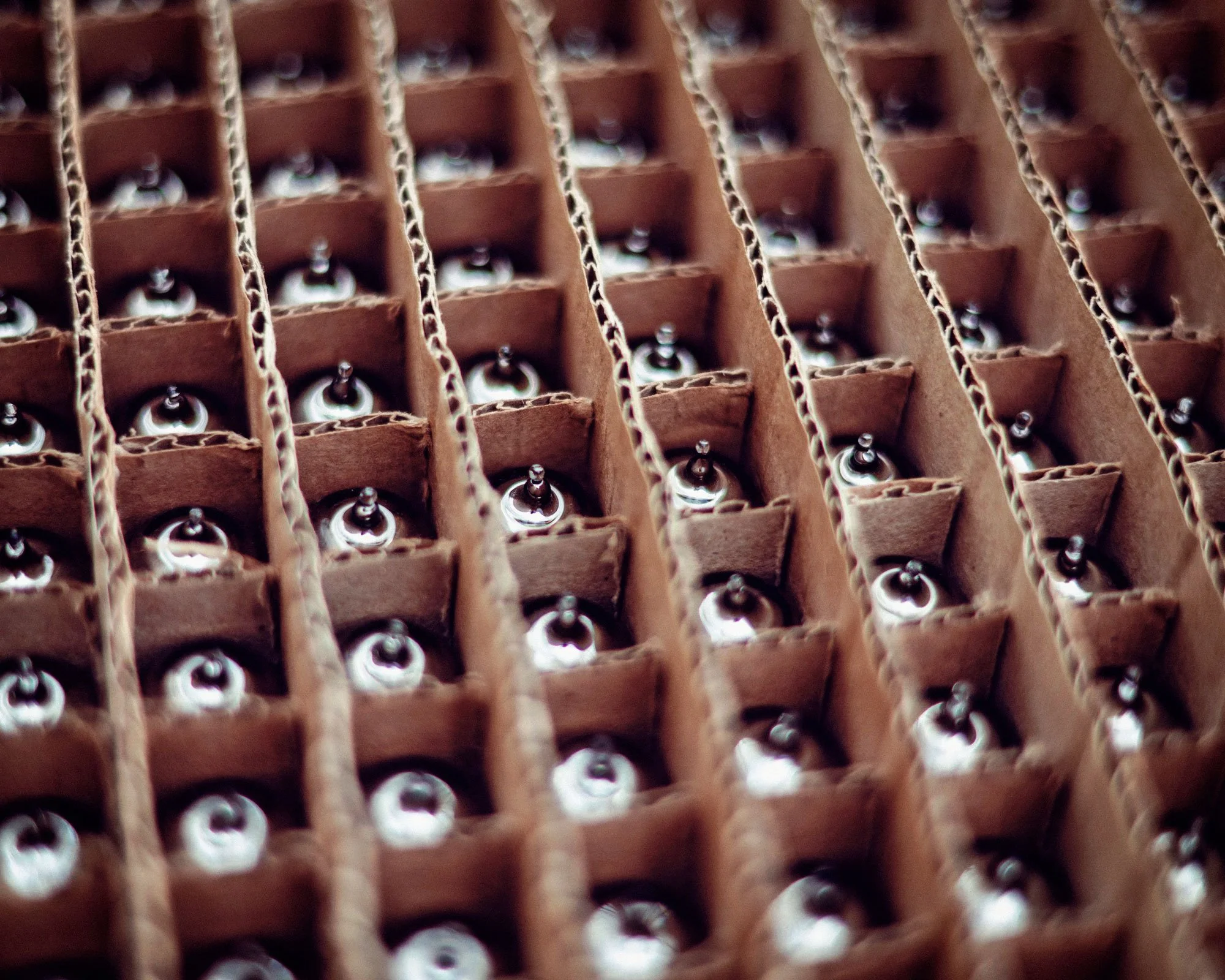
The EF86 is a unique tube. It takes a much larger signal to push it into overdrive, and it doesn't clip like a 12AX7. When it does break up, it’s almost like a fuzz. It’s very Hi-Fi with a big, full-frequency response. Because of how it responds, the ZEQD-Pre works best as a way to amplify and enhance the other effects in your chain rather than acting as a traditional "tube overdrive" pedal.
Are there hidden features or "pro tips" for using the ZEQD-Pre?
One interesting thing is the "third voice." If you bypass the pedal entirely but still use the Direct Out, you get a sculpted but mostly flat signal from the cab simulator. It’s a great way to send a filtered clean signal to a DAW or headphones.
Also, the Direct Out is very hot. It can easily drive an interface channel, so I strongly suggest using a pad on your input if you don’t want that. In some cases, it can lead to excellent results with a really nice preamp.
The pedal requires 500mA of power. What happens if a user provides less?
It needs 500mA to work as advertised. It won’t make a sound at 100mA. However, if you run it at 200mA or 300mA, it produces this gated, "zippery" fuzz tone with zero sustain. It’s an interesting sound, but for the intended loud and clear response, you must hit that 500mA requirement.
How does it handle bass?
It sounds awesome on bass. It adds a pleasant growl—it stays clean but gets "growly" in a way that really fills out the mix.
Any closing remarks on the ZEQD-Pre?
I think the beauty of the ZEQD-Pre is its simplicity. It’s a high-quality, Hi-Fi clean platform. It’s starting to bother me that there is a whole generation of kids that have never plugged a guitar into a tube amplifier in their life because they're expensive and they have a free one on their laptop.
So I hope a pedal like this could be a turning point for players and make them realize that there is something special about analog technology that they’ve been missing. It just thickens up the signal in a way that just feels a little more organic to the player and familiar to the listener.
This isn't just a gear demo—it’s a deep dive into the "shared brain" of two master builders.
Corey Jenkins is the Marketing Specialist at EarthQuaker Devices. An Akron, Ohio native, he started chasing tone at age nine after hearing Mick Ronson's guitar work on "Ziggy Stardust" for the first time. He has been active within the local music community for years and has worked professionally as a creative problem solver for the past decade and a half. In his spare time, Corey enjoys spending time with his son, his three cats, and his 1973 Univox miniKORG K1.